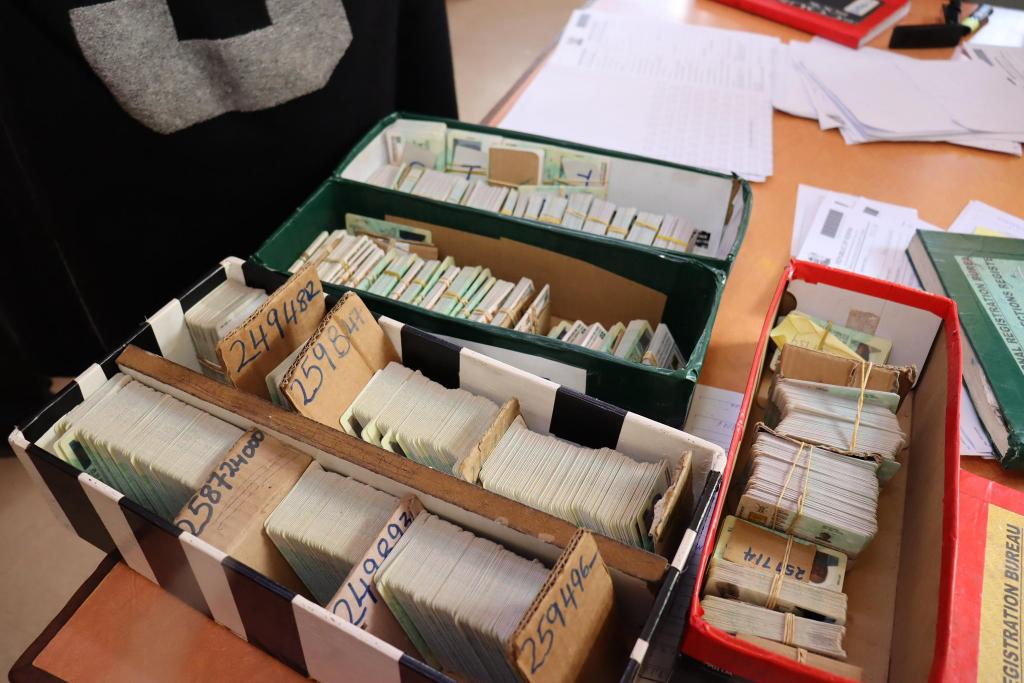
Thousands of uncollected identification documents, alongside systemic challenges such as duplicate records and resource constraints, are slowing registration services in Eldoret, officials have told lawmakers.
The concerns emerged during an oversight meeting between the Administration and Internal Security Committee and officials from the National Registration Bureau (NRB) and the Passport Processing Centre.
According to officials, a total of 6,160 national identification cards and 2,200 passports remain uncollected at the Eldoret NRB offices and the passport centre, raising questions about access to critical identification documents and public awareness.
Uasin Gishu County Commissioner Eddyson Nyale said the offices are grappling with multiple operational challenges that continue to hinder service delivery.
“The office faces a number of challenges including limited resources, transport constraints, and processing delays,” Nyale told the committee.
Director of Immigration Morris Anyanga echoed the concerns, pointing to infrastructural and logistical hurdles affecting operations.
“These include office accommodation, power interruptions, staff welfare, delayed validation cases, and inadequate communication equipment,” Anyanga said.
A major issue highlighted during the session was the prevalence of duplicate records, particularly cases where individuals hold multiple birth certificates.
Officials said the anomaly complicates verification processes and, in some instances, prevents applicants from being issued national identity cards.
Regional Coordinator Aileen Manali called for urgent reforms to address the problem, including the integration of registration systems.
“There is need for integration of registration systems and possible legal reforms to address the anomaly,” Manali said, urging legislators to consider the matter.
Officials further noted that while the adoption of digital capture has improved efficiency, reducing ID processing time to about two weeks, manual applications can take up to two months due to the centralised printing of documents in Nairobi.
Manali said that although all six sub-counties in the region are operational, they continue to face constraints such as lack of transport, insufficient office space and limited access to mobile registration kits.
“These challenges affect outreach and the ability to serve residents efficiently, especially in remote areas,” she said.
The high number of uncollected documents was also flagged as a concern, with officials warning that it undermines efforts to enhance access to identification services and could point to gaps in communication between the offices and applicants.
Members of the committee, led by Vice Chairperson Dido Rasso, acknowledged the issues raised and pledged to factor them into ongoing parliamentary considerations.
“We have taken note of the concerns raised by both offices and will take them into consideration,” Rasso said.
The lawmakers’ visit underscores growing scrutiny of registration services across the country, as the government seeks to streamline identity management systems and improve service delivery.
However, officials warned that without addressing structural challenges such as duplication of records, resource shortages and infrastructure gaps, progress in enhancing registration efficiency could remain slow, leaving many Kenyans without timely access to essential identification documents.